
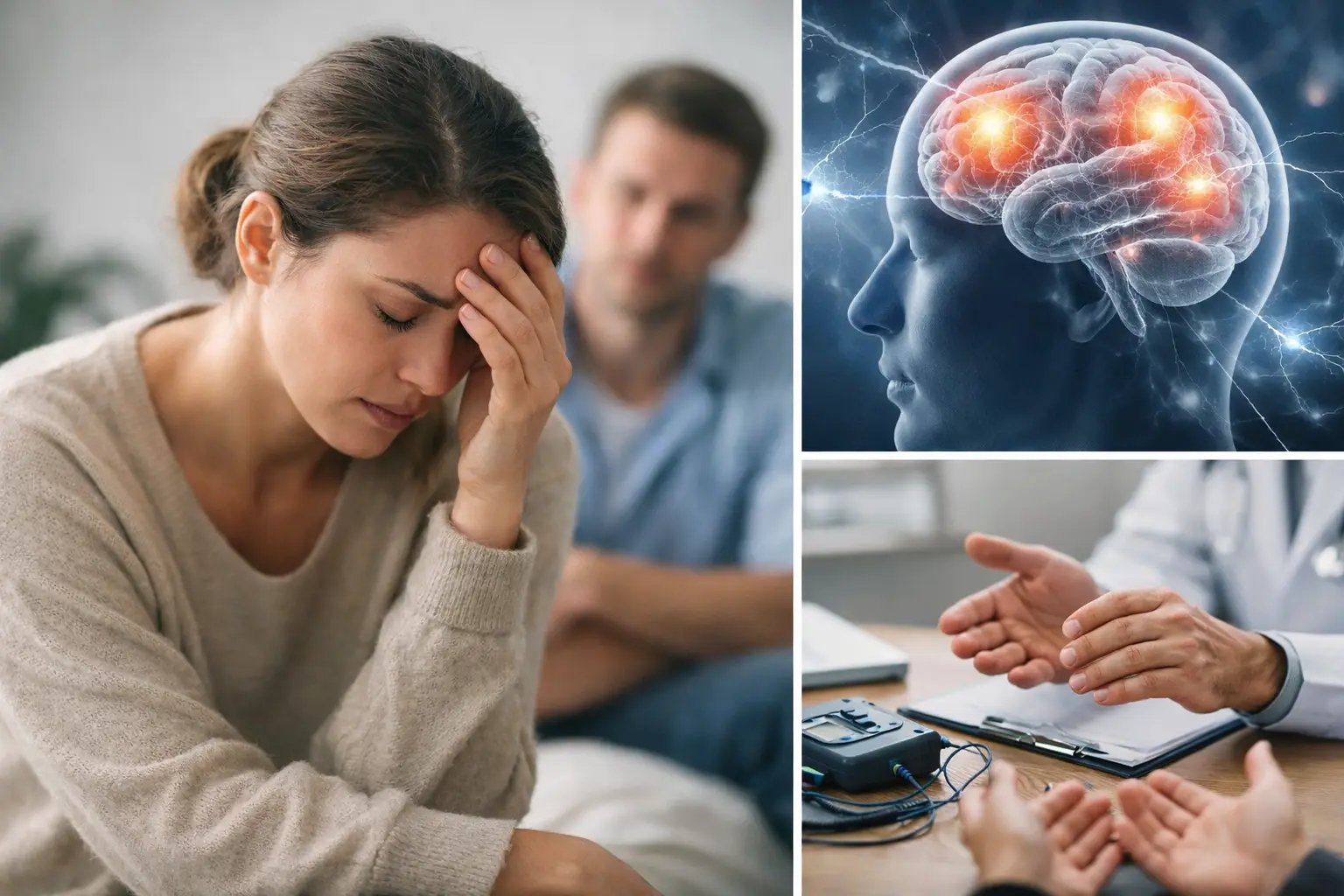
Quick answer: Understanding FND causes: why symptoms are real, why there is rarely one explanation, and how to make sense of diagnosis, triggers and next steps today.
When people ask about FND causes, they are often looking for more than a medical explanation. They may be trying to understand why their body changed, whether something was missed, or whether they are somehow to blame. You are not making this up, and FND is not a choice. The symptoms are real, can be disabling, and deserve proper support.
Functional Neurological Disorder, or FND, affects how the nervous system functions. The brain may have difficulty sending, receiving or interpreting signals involved in movement, sensation, speech, awareness and bodily control. This can lead to symptoms such as functional seizures, weakness, tremor, walking difficulties, pain, fatigue, dizziness, sensory changes and brain fog.
For many people, there is no single, neat answer to why FND developed. That uncertainty can feel frustrating, especially when you are already coping with appointments, changing symptoms and other people’s assumptions. But a complex explanation does not make the condition less real.
What do we mean by FND causes?
FND is not caused by damage to the brain or nerves in the way that a stroke, multiple sclerosis or a brain injury might be. However, this does not mean that “nothing is wrong”. FND involves a genuine problem with nervous system functioning. Think of it less as broken hardware and more as a disruption in how the system is operating.
Symptoms can be diagnosed using positive clinical signs - patterns a trained clinician can see during an assessment - rather than only by ruling out every other condition. Investigations such as scans, blood tests or EEGs may be normal, but normal test results do not mean normal symptoms or a lack of need for care.
The word “functional” can be confusing. In this context, it describes how the nervous system is working, not whether a person can simply function through their symptoms.
Why there is rarely one clear cause
For some people, symptoms begin after an illness, injury, surgery, migraine, infection, pain flare, concussion or a difficult physical event. Others notice them during a period of overload, poor sleep or intense stress. Some cannot identify any obvious trigger at all.
All of these experiences are valid. FND can develop through a combination of factors, and the balance is different for each person. It is not helpful or accurate to assume that every case is caused by trauma, anxiety or a stressful event. Some people with FND have experienced trauma; many have not. Equally, having anxiety or depression does not explain away neurological symptoms.
A person may have had a physical trigger, while another person’s symptoms appeared gradually. Someone might have managed stress for years without FND, then develop symptoms following an infection or injury. Bodies and nervous systems do not follow a simple formula.
Physical triggers and body stress
An injury, severe pain, a viral illness, a seizure-like episode, a period of reduced mobility or an operation can place the nervous system under strain. For some people, the symptoms of FND begin during or soon after this kind of event.
This does not mean the original illness or injury was imagined. It also does not mean that the physical event continues to be the only explanation. Sometimes a person has another health condition alongside FND, and both need to be taken seriously. FND can coexist with conditions such as migraine, epilepsy, long Covid, hypermobility, chronic pain or inflammatory illness.
If a symptom is new, significantly different, severe or worrying, do not assume it is automatically FND. Seek medical advice. Urgent help is needed for symptoms such as sudden facial drooping, new one-sided weakness, severe chest pain, serious breathing difficulty, a major head injury, or a seizure or episode that is different from your usual pattern and does not settle as expected.
Stress is not the same as “it is all in your head”
Stress can affect everyone’s nervous system. It can change sleep, pain levels, muscle tension, concentration, heart rate and energy. For some people with FND, stress, conflict, sensory overload, fear or feeling unsafe can increase symptoms. That is a body response, not a personal failure.
However, stress is not required for FND to be real, and identifying stress does not make symptoms voluntary. It may be one influence among many. Being told to “just relax” or “think positively” can feel dismissive because it ignores the physical reality of what is happening.
A more useful question is: what makes my nervous system work harder, and what helps it feel steadier? The answer might include pacing activity, reducing pressure, treating pain, improving sleep where possible, using grounding techniques or asking for practical support. It will not be identical for everyone.
Triggers are not necessarily causes
A trigger is something that brings on or worsens symptoms in the moment. It is not always the reason FND began. For example, a crowded supermarket may trigger dizziness, shaking or a functional seizure, but it did not necessarily cause the condition. Fatigue may worsen leg weakness, but fatigue alone may not explain it.
Recognising patterns can still be useful. It can help you plan rest, communicate what support you need and give clinicians clearer information. The aim is not to monitor yourself until every symptom has an explanation. It is to notice patterns with curiosity rather than blame.
For functional seizures or episodes, it can help to record the time, duration, what happened beforehand, symptoms during recovery, sleep, pain, illness and medication changes. A private tracker such as SeizeControl can turn this into an appointment-ready record, without relying on memory during a stressful consultation.
Why symptoms can change from day to day
Fluctuation is one of the hardest parts of FND. You may walk further one day and struggle to stand the next. You may look well during an appointment while needing hours or days to recover afterwards. This inconsistency is often misunderstood, but it is common in FND and does not mean you are exaggerating.
Symptoms may vary with fatigue, pain, infection, hormonal changes, sensory stimulation, movement, fear of falling, attention, medication effects or the demands of the day. Sometimes there is no clear reason. A variable condition still creates real limits, and you do not need to prove your worst day to deserve adjustments, benefits support or care.
It can be tempting to push hard on a better day, especially when you want to catch up with life. Sometimes that is manageable; sometimes it leads to a flare. Pacing is not giving up. It is a way of working with the energy and capacity you have, rather than repeatedly paying for activity with a crash.
Making sense of your own story
You do not need to find a perfect cause before you can move forward. For some people, understanding the background is helpful. For others, searching for one explanation becomes exhausting or leads to self-blame. Treatment and support can still be worthwhile even when the starting point remains unclear.
At your next appointment, it may help to ask what positive signs supported your diagnosis, whether any other conditions need investigation or treatment, and what support is available for your main symptoms. Be specific about what affects daily life: falls, functional seizures, pain, fatigue, mobility, communication, work, caring responsibilities or getting through personal care.
Bring a brief timeline if you can. Include when symptoms started, any illness or injury around that time, major changes, current medication and what makes symptoms better or worse. This is not about proving yourself. It helps make sure the conversation is about your real life, not only a short snapshot in a clinic room.
FND Connect exists because understanding a diagnosis is only one part of living with it. You deserve clear information, practical tools and people who understand that symptoms can be invisible, unpredictable and deeply disruptive.
There may not be one answer that explains why FND happened to you. But there can still be a next step: one calmer appointment, one useful pattern noticed, one adjustment requested, or one person who finally believes you.