
Quick answer: A practical guide to FND equipment, from choosing aids for mobility, fatigue and daily tasks to discussing needs with your GP, therapist or employer.
When symptoms change by the hour, deciding whether you ‘need’ an aid can feel far harder than it should. FND equipment is not about giving in, proving that you are unwell, or choosing dependence over independence. It can be a practical way to save energy, reduce risk and make more room for the parts of life that matter to you.
You are not making this up if walking, balance, pain, fatigue, weakness, tremor, brain fog or functional seizures make ordinary tasks harder. The right piece of equipment will look different for each person, and it may be useful on some days but not others. That is a normal part of living with a fluctuating condition.
What does FND equipment mean in practice?
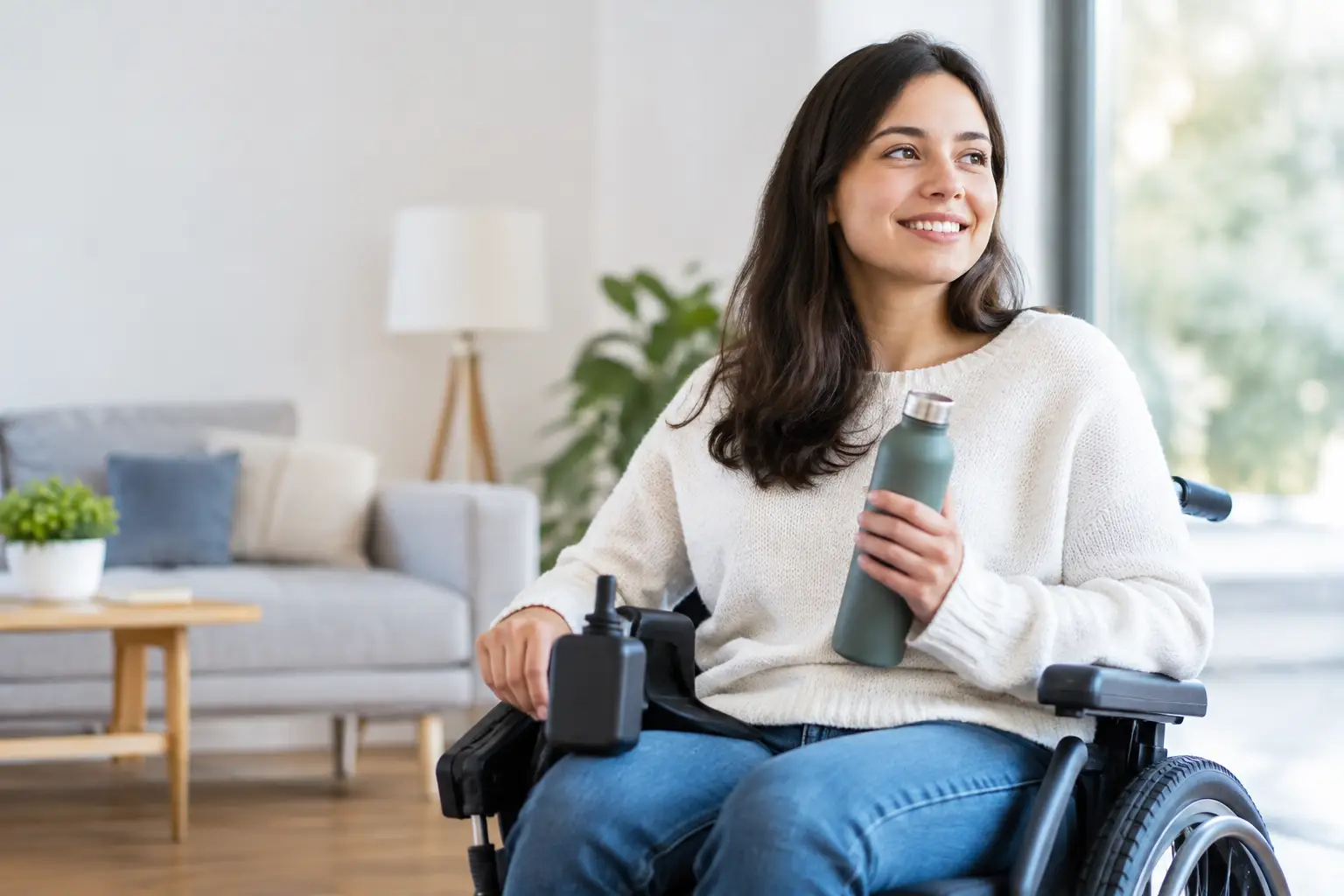
Equipment can include mobility aids such as sticks, crutches, rollators, wheelchairs or powered wheelchairs. It can also mean a shower seat, perching stool, raised toilet seat, handrails, a kitchen trolley, a reacher, a jar opener, a bed rail or a device that helps with dressing.
Some support is less visible. Noise-reducing headphones, a timer, a pill organiser, a voice-to-text app or a lightweight bag can reduce cognitive load and physical effort. For people who experience functional seizures or episodes, an alert system, protective clothing, a low bed or changes to the home layout may help reduce injury risk. What is useful depends on your symptoms, environment, goals and safety needs.
Aids are tools, not a label. You may use a wheelchair for a long hospital corridor but walk around your home. You may need a shower seat during a flare but not every week. Needing flexibility does not make your needs less real.
Start with the task, not the product
It is tempting to search for the one item that will fix everything. Usually, a clearer starting point is the task that is currently costing you too much. Perhaps you are missing meals because standing at the hob is exhausting, avoiding a shower because of falls, or staying indoors because you cannot safely manage a trip to the shops.
Describe what happens before, during and after the task. Consider whether the main barrier is fatigue, pain, balance, weakness, involuntary movement, sensory overload, concentration, episodes or fear of falling. Also think about the outcome you want: safer washing, less pain while cooking, getting to an appointment, or keeping enough energy to see family afterwards.
This approach matters because the same item can be helpful for one person and unsuitable for another. A walking stick may improve confidence and balance for someone, but it may be unsafe if an arm is weak, painful or affected by sudden movements. A wheelchair can protect energy and widen access to life, but it also needs to fit your body, home, transport and ability to manage transfers. There is no moral prize for pushing through symptoms, and there is no one correct level of equipment use.
Ask for an assessment where you can
Before buying costly equipment, ask whether a professional assessment is available. Your GP may be able to refer you to occupational therapy, physiotherapy, community rehabilitation, a falls service or wheelchair services, depending on your local area and needs. If you are already under a neurology, FND or therapy team, tell them plainly which activities are no longer safe or manageable.
An occupational therapist can look at daily activities and the layout of your home. A physiotherapist can advise on movement, mobility and walking aids. A wheelchair assessment should consider posture, pressure care, transfers, fatigue, transport and how the chair will be used, rather than simply providing the first chair available.
Waiting times can be frustrating, especially when you need help now. Low-cost, low-risk changes may be worth considering while you wait, but take care with items that affect mobility, transferring, moving around stairs or preventing falls. A poorly fitted aid can increase pain, strain or injury.
If you rent your home or need adaptations such as rails, ramps or a level-access shower, your local authority adult social care team may be able to arrange a care needs assessment. You can also ask about an occupational therapy assessment for home adaptations. Eligibility and local processes vary, but asking is reasonable. You do not have to wait until things reach crisis point.
A short record can make appointments more useful
Appointments are often brief, and it can be difficult to explain variable symptoms when you are having a better day in the clinic. Bring specific examples rather than trying to describe your whole life at once. For two weeks, note the activity, what symptoms appeared, what you tried, whether you fell or had a near miss, and how long recovery took.
For example: ‘I can stand for five minutes to prepare food, then my legs shake and I need to lie down for an hour.’ Or: ‘I have had three episodes in the bathroom this month and am worried about injury when showering.’ These details help a clinician understand why equipment could make a meaningful difference.
If functional seizures or episodes are part of your FND, private tracking through SeizeControl can help you notice patterns and create an appointment-ready record. Tracking is not about monitoring yourself perfectly. It is about giving yourself a clearer picture when memory, stress or brain fog make recall difficult.
Funding, work and the pressure to justify yourself
Some equipment may be supplied or recommended through NHS or council services, but this is not guaranteed and varies by area. Charities, local support services, Disabled Facilities Grants and employment schemes may sometimes help with specific needs. It is okay to ask what support exists, even if you have been dismissed before.
At work, equipment can be part of a reasonable adjustment. This might include a chair that better supports you, speech-to-text software, a parking arrangement, a closer workstation, reduced carrying, flexible breaks or home working where the role allows. Focus the conversation on what helps you do your job safely and reliably, rather than feeling you must disclose every detail of your health.
For benefits assessments, keep copies of recommendations, reports, receipts and your own examples of how symptoms affect you. Equipment does not automatically mean you can manage independently. Equally, being able to do something once does not show that you can do it safely, repeatedly, to an acceptable standard or without significant after-effects.
Safety comes first when symptoms are new or different
Equipment can support everyday safety, but it cannot diagnose the cause of a new symptom. Seek urgent medical advice for symptoms that are new, severe or different from your usual FND pattern, particularly sudden chest pain, serious injury, trouble breathing, a persistent loss of consciousness, or symptoms of stroke such as facial weakness, arm weakness or speech difficulty.
If you have had a fall, a head injury, or an episode in water, get appropriate medical advice. Do not assume every change is ‘just FND’. You deserve to be taken seriously, and getting checked is not overreacting.
Give yourself permission to make life more manageable
The best equipment is often the item that quietly gives something back: enough energy to make dinner, a safer shower, the confidence to leave the house, or less recovery after a necessary journey. Your needs can change, and so can the tools you use.
You do not have to earn practical support by becoming more unwell first. Start with one difficult task, name what would make it safer or less draining, and take that information to the next person who can help.